Fuel Tank Blow Molding Solutions | Custom & Certified

All Categories

Get a Free Quote

Pengheng Blow Molding: one-stop,custom solutions from concept to product
Email
Name
Company Name
Message
0/1000
WhatsApp/wechat
Fuel Tank Blow Molding Solutions | Custom High-Quality Tanks

Fuel Tank Blow Molding Solutions | Custom High-Quality Tanks

Fuel tank blow molding is a specialized manufacturing process used to create durable, leak-proof, and complex-shaped fuel tanks for various vehicles and equipment. This page explores the expertise of Changzhou Pengheng Auto Parts Co., Ltd., a high-tech enterprise established in 2007, specializing in non-standard blow molding products. With three production bases in Shenyang, Wuhan, and Changzhou, 26 blow molding machines, and an annual capacity exceeding 5 million sets, we serve automotive, medical, military, household, and industrial packaging sectors. Our philosophy, “Customization is the standard, innovation knows no boundaries,” drives us to provide flexible one-stop services from design to mass production. We address complex challenges in fuel tank blow molding, including specialized shapes, functions, and materials.
Get A Quote

Advantages of the product

Advanced Manufacturing Capabilities for Fuel Tank Blow Molding

With 26 blow molding machines across three production bases in Shenyang, Wuhan, and Changzhou, we possess the infrastructure to handle projects of any scale. Our annual capacity exceeds 5 million sets, ensuring timely delivery even for high-volume orders. We specialize in non-standard fuel tank blow molding, accommodating complex shapes and multi-layer structures. Our machinery includes extrusion blow molding and injection blow molding, allowing us to select the optimal process based on tank size, material, and performance requirements. We utilize advanced control systems to monitor parison thickness, mold temperature, and cycle times, ensuring consistent quality. For fuel tanks, we employ multi-layer co-extrusion to incorporate barrier layers that reduce permeation and enhance safety. Our tooling department designs and fabricates precision molds, enabling rapid prototyping and design iterations. This vertical integration reduces lead times and costs.

Customization and Engineering Expertise in Fuel Tank Blow Molding

Our philosophy, “Customization is the standard, innovation knows no boundaries,” reflects our dedication to tailored solutions. We understand that fuel tanks must fit specific spaces and meet unique performance criteria. Our engineering team works closely with clients from the design phase, using CAD/CAE software to simulate and optimize tank designs for structural integrity, capacity, and weight. We can incorporate features such as baffles, mounting points, filler necks, and venting systems directly into the mold, reducing secondary operations. We offer a wide range of materials, including HDPE, PP, PA, and EVOH, to ensure compatibility with various fuels and operating conditions. For alternative fuel vehicles, we develop tanks for CNG, LNG, and hydrogen, addressing high-pressure and permeation challenges. Our engineers also assist with regulatory compliance, ensuring tanks meet standards like ECE R34, FMVSS 301, and ISO 11439.

Uncompromising Quality and Reliability in Fuel Tank Blow Molding

Fuel tanks are safety-critical components, and we treat them with the utmost rigor. Our quality management system is ISO 9001:2015 certified, and we adhere to IATF 16949 principles for automotive products. Every fuel tank undergoes comprehensive testing, including dimensional inspection, leak testing, burst pressure testing, drop impact testing, and material analysis. We use advanced leak detection methods such as pressure decay and helium mass spectrometry to ensure zero leaks. Our blow molding process is monitored in real-time to maintain wall thickness uniformity, which is crucial for impact resistance and weight optimization. We also conduct accelerated aging tests to verify long-term durability and permeation resistance. Our facilities maintain clean room environments for medical and food-grade applications, but for fuel tanks, we focus on contamination control to prevent fuel system issues.

High-Quality Fuel Tank Blow Molding Solutions

Fuel tank blow molding is a critical manufacturing process that demands precision, material science knowledge, and rigorous quality control. Unlike metal tanks, blow-molded plastic fuel tanks offer advantages such as design freedom, weight reduction, corrosion resistance, and lower tooling costs. They are now standard in modern vehicles, contributing to improved fuel efficiency and reduced emissions. The process begins with selecting the right thermoplastic, often HDPE due to its excellent chemical resistance and impact strength. For increased barrier properties, multi-layer structures with EVOH are used to prevent fuel vapor permeation, meeting environmental regulations. The blow molding process involves extruding a parison, enclosing it in a mold, and inflating it with air to conform to the mold cavity. Key parameters include parison thickness control, mold temperature, and blowing pressure, all of which affect wall thickness distribution and mechanical properties.

Frequently Questions

What materials are commonly used in fuel tank blow molding, and how do you select the right one?

The most common material for fuel tank blow molding is high-density polyethylene (HDPE) due to its excellent balance of mechanical strength, chemical resistance, and cost-effectiveness. However, depending on the application, we may use polypropylene (PP) for higher temperature resistance, polyamide (PA) for enhanced barrier properties, or multi-layer structures combining HDPE with EVOH to minimize fuel permeation. Material selection depends on factors such as the type of fuel (gasoline, diesel, ethanol, CNG, hydrogen), operating temperature range, regulatory requirements, and tank geometry. For example, ethanol-blended fuels can be more corrosive, requiring specific grades of HDPE or surface treatments. We also consider impact resistance at low temperatures, which is critical for vehicles in cold climates. Our engineers evaluate these factors and recommend the optimal material, often conducting permeation tests and mechanical testing to validate performance.
Absolutely. Our expertise in non-standard blow molding allows us to produce fuel tanks with complex geometries that would be difficult or impossible with other processes. We can integrate features such as baffles to reduce sloshing, mounting brackets, filler necks, vent valves, and fuel pump modules directly into the mold, eliminating secondary operations and potential leak points. Our advanced mold design and parison control technology enable us to achieve uniform wall thickness even in intricate shapes, ensuring structural integrity. We use 3D CAD modeling and simulation to optimize the design for manufacturability and performance. For example, we have produced saddle-shaped tanks that fit over drive shafts, tanks with deep recesses for spare tire wells, and tanks with molded-in threaded inserts for secure connections. Our multi-axis CNC machines and EDM equipment allow us to create precision molds with tight tolerances.
Quality and safety are paramount in fuel tank manufacturing. We implement a comprehensive quality management system certified to ISO 9001:2015, with practices aligned to IATF 16949 for automotive. Every tank undergoes rigorous testing: dimensional checks to verify critical dimensions, leak testing using pressure decay or helium mass spectrometry to detect even microscopic leaks, burst pressure testing to ensure the tank can withstand internal pressure beyond normal operating conditions, and drop impact testing to simulate crash scenarios. We also perform material tests to verify density, melt flow index, and mechanical properties. Our blow molding process is continuously monitored with sensors for parison thickness, mold temperature, and cycle time, and statistical process control is used to maintain consistency. Traceability is ensured through batch coding, allowing us to track materials and processes for each tank.
Lead time varies depending on the complexity of the tank, mold requirements, and order quantity. Typically, for a new custom project, the timeline includes design and engineering (2-4 weeks), mold design and fabrication (6-12 weeks), sampling and testing (2-4 weeks), and mass production (4-6 weeks). Overall, you can expect 3-6 months from concept to delivery. However, we can expedite certain phases if needed. Our in-house mold shop allows us to control the schedule and avoid external delays. For repeat orders, lead time is significantly shorter, often 4-8 weeks depending on volume. We also maintain a stock of common materials to reduce procurement time. To ensure a smooth process, we assign a project manager who provides regular updates and coordinates all activities. We recommend early involvement to allow for design optimization and avoid costly changes later. Our goal is to deliver high-quality fuel tanks on time, every time.
Yes, we offer comprehensive design assistance and regulatory compliance support. Our engineering team uses advanced CAD/CAE tools to help you optimize your fuel tank design for performance, manufacturability, and cost. We can suggest design modifications to improve wall thickness distribution, reduce stress concentrations, or simplify mold construction. We also assist with material selection and provide recommendations based on your functional requirements. Regarding regulatory compliance, we are well-versed in standards such as ECE R34, FMVSS 301, ISO 11439, and others applicable to fuel systems. We can guide you through the testing and certification process, ensuring your tanks meet all necessary regulations for your target markets. Our experience with global clients means we understand the nuances of different regulatory environments. Whether you need assistance with permeation requirements, crash testing, or pressure vessel codes, we are here to help.

Related article

Customer Testimonials

John Matthews
Exceptional Quality and Partnership

We have been sourcing fuel tank blow molding from Changzhou Pengheng for over five years, and they consistently exceed our expectations. Their engineering team helped us redesign a tank for a new truck model, integrating baffles and a filler neck that reduced assembly time. The tanks passed all our rigorous testing, including a 10-meter drop test and 100,000-cycle pressure test. Their communication is excellent, and they always meet deadlines. We consider them a strategic partner rather than just a supplier. Their ability to handle complex shapes and provide material recommendations has been invaluable. I highly recommend them to anyone needing high-quality fuel tanks.

Maria Gonzalez
Reliable and Innovative Fuel Tank Solutions

As a manufacturer of agricultural equipment, we needed fuel tanks that could withstand harsh environments and fit into tight spaces. Pengheng’s team worked closely with us to develop a custom tank using a multi-layer material that resists corrosion from biodiesel. The blow molding quality is outstanding, with uniform wall thickness and no leaks. Their one-stop service, from design to delivery, simplified our supply chain. We also appreciated their support with regulatory compliance for the European market. The tanks have been in service for three years without any issues. Pengheng is our go-to partner for all our blow molding needs.

Get a Free Quote

Pengheng Blow Molding: one-stop,custom solutions from concept to product
Email
Name
Company Name
Message
0/1000
WhatsApp/wechat
Comprehensive One-Stop Production Services for Fuel Tank Blow Molding

Comprehensive One-Stop Production Services for Fuel Tank Blow Molding

Our one-stop service model distinguishes us in the fuel tank blow molding industry. From the initial concept to mass production, we manage every step under one roof. This includes design and engineering, mold design and fabrication, material selection, blow molding, secondary operations, assembly, testing, and logistics. By keeping everything in-house, we eliminate the inefficiencies and communication gaps that often arise when multiple vendors are involved. Our project managers serve as a single point of contact, ensuring seamless coordination and accountability. For clients, this means faster turnaround times, reduced costs, and consistent quality. We can quickly iterate on designs, produce prototypes, and transition to full-scale production without delays. Our three production bases in Shenyang, Wuhan, and Changzhou provide flexibility and redundancy, allowing us to handle large orders and unexpected spikes in demand.
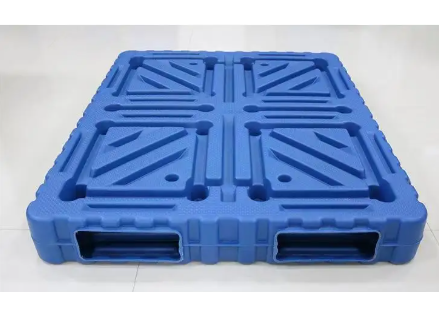
Cutting-Edge Technology and Innovation in Fuel Tank Blow Molding

Cutting-Edge Technology and Innovation in Fuel Tank Blow Molding

Innovation is at the core of our operations. We continuously invest in advanced blow molding machinery and auxiliary equipment to stay ahead of industry trends. Our 26 blow molding machines include state-of-the-art extrusion and injection blow molding units capable of producing multi-layer tanks with precise barrier properties. We use robotic arms for part handling, automated deflashing, and inline inspection systems to enhance efficiency and consistency. Our engineering team employs sophisticated simulation software to predict material flow, cooling, and shrinkage, optimizing mold designs before cutting steel. This reduces trial-and-error and accelerates development. For fuel tanks, we have developed proprietary techniques for controlling parison thickness in complex shapes, ensuring uniform wall thickness and optimal weight. We also explore emerging materials and processes, such as bio-based plastics and recycled content, to support sustainability goals.

Related Search